10 Claude Code Best Practices for Agentic Coding: A 2026 Guide
Written by
OpenHands Team
Published on
Agentic coding has gone from a fun demo to something you can lean on during a normal workday. Point a coding agent at a real task and it reads the codebase, plans an approach, edits across files, runs the tests, and hands back a change you can review instead of you writing every line by hand. Work that used to eat an afternoon comes back as a reviewable diff, and your attention goes to the parts that need real judgment.
Reaching that result reliably takes a different set of habits than writing code yourself, and many developers build those habits in Claude Code first. This guide walks through ten of them, from the explore-plan-code-commit loop to the prompts, checks, and context habits that keep long sessions on track. The same habits carry straight into OpenHands when you move from single sessions to agents that run across your whole codebase.
What agentic coding in Claude Code actually changes
You describe the outcome you want, and the agent explores the code, plans an approach, makes the changes, and verifies the result with tests and build commands. Claude Code runs that whole loop at the project level until the task meets your criteria, which has little in common with autocomplete that finishes the line you're typing.
The most valuable skill shifts too. With the agent doing the typing, your leverage moves toward specifying outcomes, constraints, and verification, and the work that pays off is describing "done" precisely. That means naming the outcome clearly, pointing at the right files, and defining the check that proves the task is finished.
10 Claude Code best practices for agentic coding
The practices below run roughly in order. The first four are the core loop, and the rest are the habits that keep that loop reliable as sessions get longer and tasks get bigger.
1. Explore in plan mode before it touches your code
Plan mode keeps the agent in read-only exploration so it can map the code before changing anything. You can enter it with claude --permission-mode plan at startup, by cycling with Shift+Tab during a session, or with the /plan command. For a thorny architectural question, ask Claude to think it through carefully before proposing anything, since the reasoning up front saves backtracking later.
2. Turn exploration into a plan you've reviewed
The plan needs a review before a single line of code gets written. A pattern that works well is to have Claude write its open questions into a planning.md file, answer them, and iterate until the plan is right, since a good plan usually means the implementation lands in one pass. For high-stakes changes, a fresh model reviewing the plan will often catch a wrong turn the original reasoning baked in.
3. Implement against the plan, one piece at a time
Once the plan is approved, cycle to accept-edits mode with Shift+Tab so the agent works without a prompt on every step. A solid plan means less backtracking here. To keep the agent from drifting, ask for one function at a time, or have it stub the functions first and fill them in one by one, rather than requesting the whole change at once.
4. Commit in clean, revertible steps
Staging and committing with git at logical checkpoints beats letting the agent auto-commit everything. Some changes you'll want to revert, and clean commits make that a one-line operation instead of an archaeology project. It's also worth scanning the diff for security issues before each commit lands.
5. Write prompts the agent can finish without correction
Most failed sessions trace back to the prompt rather than the model. Claude can infer intent, but it can't read your mind, and precise instructions mean fewer corrections, a point the official best-practices guide makes plainly. A handful of habits get prompts landing on the first try:
-
Scope the task tightly: Name the file, the scenario, and how you want it tested. A good example is asking for a logged-out edge-case test on foo.py with no mocks.
-
Point at existing patterns: Reference a file that already does what you want instead of describing the convention. Claude picks up conventions faster from a real example than a description.
-
Describe bugs by symptom, location, and fix: Tell it what breaks, where to look, and what "fixed" looks like, then ask for a failing test before the fix.
-
Feed context through the right channels: Use
@filereferences, pipe command output straight in, or paste a screenshot rather than retyping what the agent could read itself. -
Handle one issue per prompt: A single prompt listing every problem in a block of flawed code does worse than working through them one at a time.
A vague prompt still has its place. Asking what you'd improve in a file is fair when you want the agent's read, as long as you keep it scoped so it doesn't wander through hundreds of files.
6. Give the agent a way to check its own work
Without a runnable check, an agent tends to stop when the work looks done, which isn't the same as done. A check that returns pass or fail keeps it honest, whether that's a test suite, a build exit code, a linter, or a screenshot diff. The agent should also show the command it ran and the output. You can layer that verification from light to strict:
-
In-prompt check: Ask Claude to run the tests and keep going until they pass.
-
Goal condition: Configure a separate evaluator that re-checks the work against your definition of done after every turn.
-
Stop hook: A shell script or agent blocks the turn from ending until a check passes, with a built-in safeguard so it can't block forever.
-
Second-opinion subagent: A fresh model tries to refute the result, so the agent doing the work isn't the one grading it.
The same spectrum holds up in production. Spotify's background coding agent runs deterministic verifiers before a pull request (PR) even opens, then puts an LLM acting as a judge on top that vetoes about a quarter of agent sessions. That is Spotify's own internal background-agent system rather than a general industry benchmark, though the layered approach carries over well. One line in your prompt heads off a familiar failure. A short instruction to fix the root cause instead of suppressing the error keeps it from papering over the problem with a bare exception or fake fallback data.
7. Write a CLAUDE.md that earns its place
A CLAUDE.md file gives Claude the project context it can't infer, and Claude Code reads it at the project root, in subdirectories, at the user level, and from any organization-managed settings. A short file works better, since a tight set of real instructions beats a long one that buries the rules that matter. A few things belong in it:
-
Project commands: The exact test, build, and lint invocations the agent should run, like npm test.
-
Architecture decisions: Constraints the agent should respect and directories it should leave alone.
-
Team conventions: Rules a linter doesn't enforce but reviewers still expect.
Personality notes and generic directives a linter already covers don't belong in it. It's best to start the file late, once you know what Claude actually gets wrong, and add entries one at a time as it makes a mistake worth recording. For bigger repos, point Claude to the right files rather than dumping everything into one place.
8. Set permissions and hooks deliberately
Permissions decide what the agent can touch, and in Claude Code they live in settings.json through allow, ask, and deny rules. A common setup is deny-by-default with a tight allowlist, plus explicit deny rules for risky operations like network calls. Hooks fire at fixed points in the loop, like before a tool runs, after it runs, or when the agent tries to stop. Each one can allow that step, warn, or block it with an exit code.
All of that scopes a single session on your machine, and the same scoping has to happen one level up once a team runs many agents at once.
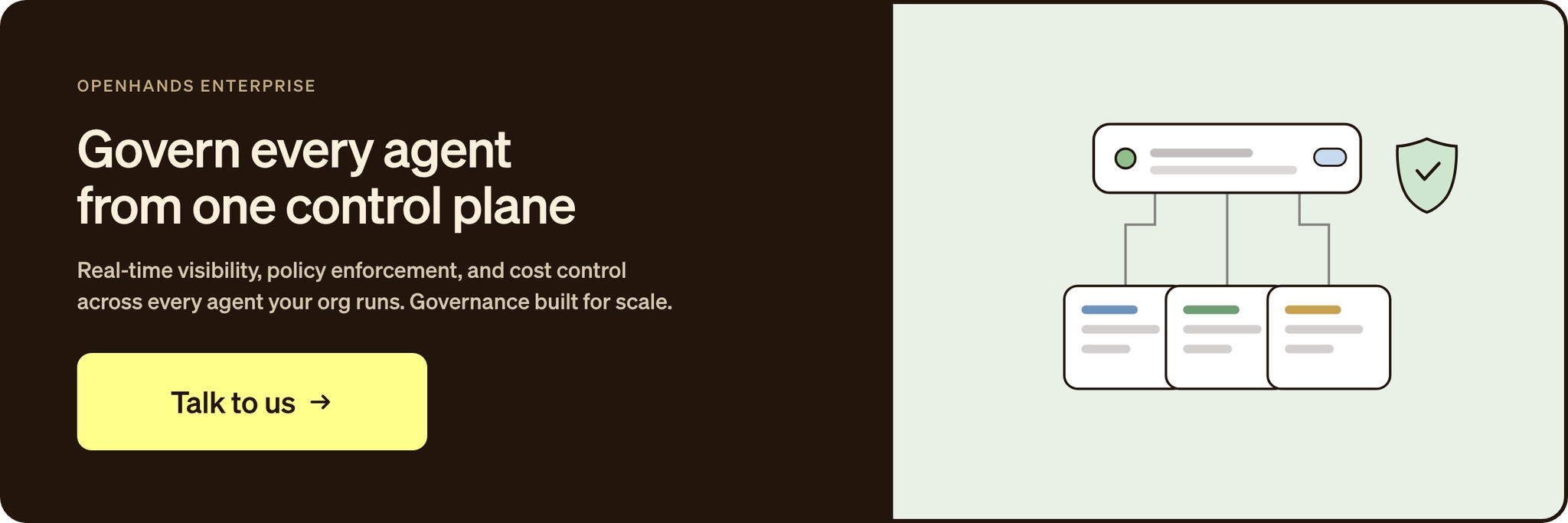
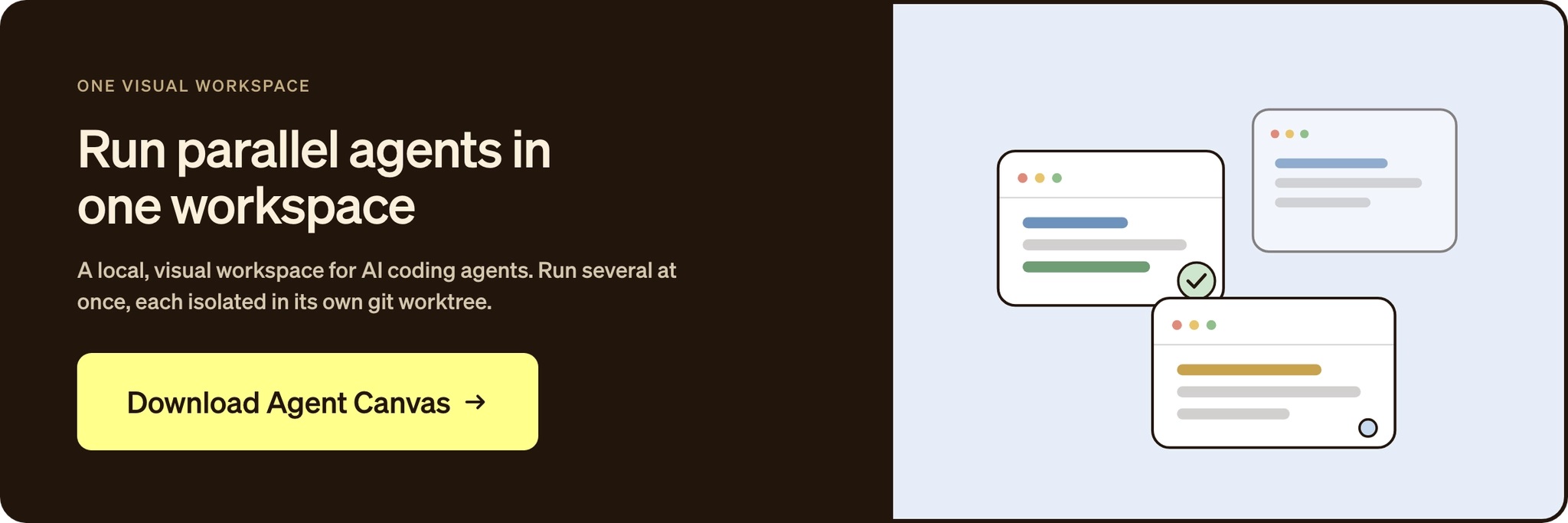
OpenHands is an open-source platform for building and running AI coding agents, and it runs each one in a sandboxed runtime with scoped permissions so a fleet of agents won’t inherit broad access to your repositories and secrets. In OpenHands Enterprise, you can define those permission rules once through the Agent Control Plane and apply them to every agent and every run, so a security or platform team signs off on what agents can reach instead of trusting each developer's local settings.json.
9. Extend Claude Code with skills, subagents, and MCP
Skills, subagents, and connected tools are how you grow Claude Code beyond a single prompt-and-response loop. Skills let you package reusable instructions, subagents keep specialized research or review work in a separate context, and the Model Context Protocol (MCP) connects the agent to external tools and data sources.
The same need shows up once you move beyond one local session, though OpenHands handles it with its own building blocks rather than a one-to-one remap of Claude Code's skills, subagents, and hooks. In OpenHands, developers can turn repeatable agent workflows into reusable automations, skills, and plugins that run across a local workspace, a remote VM, OpenHands Cloud, or an enterprise deployment. Instead of recreating the same setup in every terminal session, teams can codify the workflow once, share it, and run it with the right execution environment, model, and controls.
10. Manage context so long sessions stay reliable
Good context management keeps long tasks moving instead of circling. Every agent works inside a finite context window, and once it fills with dead ends and wrong assumptions, output quality drops no matter how strong the model is.
Correcting a bad turn early beats letting it compound. Pressing Escape interrupts the agent mid-task, and pressing it twice opens the rewind menu to roll back to an earlier checkpoint. When the context holds an assumption the model keeps reverting to, /compact is the wrong tool, because it preserves that assumption instead of clearing it. The fix is to wipe the slate with /clear and restart with a sharper prompt.
A few commands cover the rest. /clear resets context between unrelated tasks so one job stops bleeding into the next. /compact with a focus instruction handles a long but coherent session, keeping the part of the task you care about and dropping the noise. Heavy research can go to a subagent that hands back a short summary, and /rename labels a session you plan to resume later.
Common agentic coding failure patterns to avoid
Most agentic coding failures trace back to context that got wasted or polluted along the way. Spotting them early keeps a session productive instead of turning it into an expensive dead end. The five worth knowing:
-
The kitchen-sink session: Running unrelated tasks in one session pollutes the reasoning behind later work, which often gets misread as the model degrading. Clear context between jobs.
-
Correcting in circles: Each failed attempt stays in context, and new corrections pile on top, so progress grinds down. Dump progress to a file, clear, and restart with a sharper prompt.
-
The bloated CLAUDE.md: When real rules sit buried under speculative ones, the model weighs them all the same and follows none. Keep the root file short and push domain rules into subdirectories.
-
Trust without verification: Code that looks correct can still break on edge cases, and a silent wrong answer costs far more than a loud crash with a stack trace.
-
Infinite exploration: An unscoped investigation reads hundreds of files and fills the window without producing anything usable. Scope it tightly or hand it to a subagent.
The price of each climbs as agents spread across a team. A sloppy local session costs you an afternoon, but one bad automation can burn a week across dozens of repositories, which is why scoped permissions and auditable runs matter once agents leave a single laptop.
How OpenHands carries these habits past one laptop
Every habit here holds no matter which agent you run, and skipping them gets more expensive once agents move off your laptop into shared, always-on work. OpenHands is built for the point where local agent habits need to become repeatable workflows. It picks up where a single Claude Code session leaves off, keeping the work running after you close your laptop and carrying that same agent from a solo workflow, to shared team automations, to a system the whole engineering organization runs on.
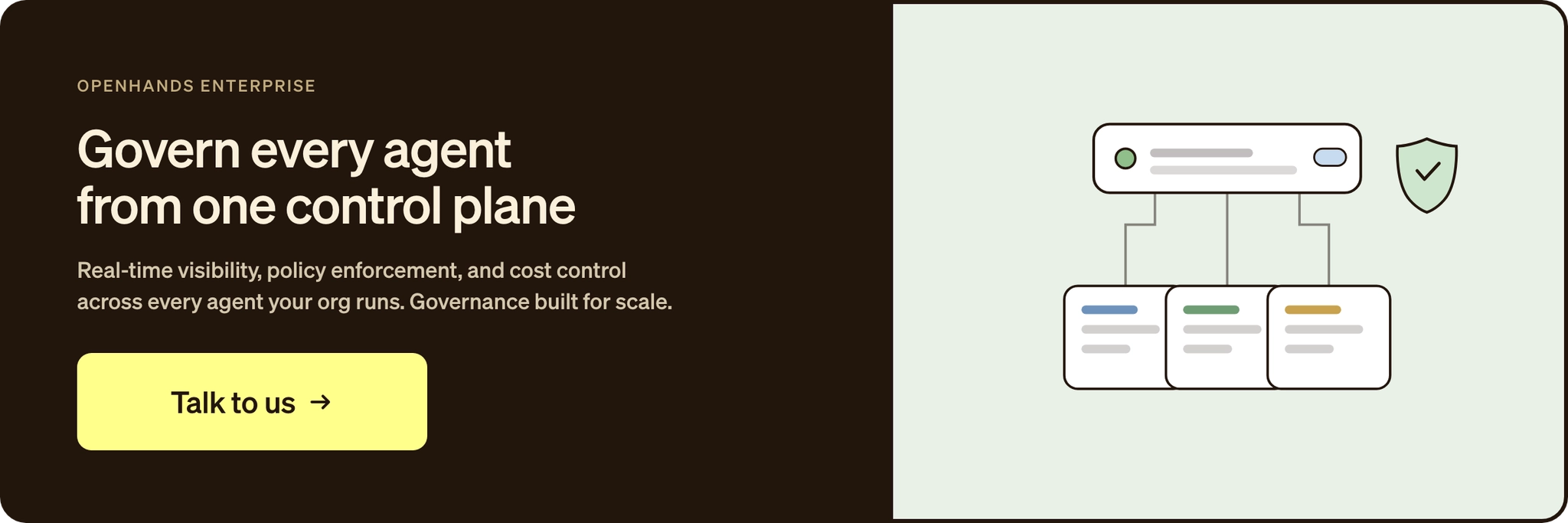
The starting point is Agent Canvas, the local-first OpenHands workspace that connects to external coding agents like Claude Code, OpenAI Codex, Gemini CLI, and the OpenHands harness through the Agent Client Protocol (ACP). Developers can start on their laptop, connect the tools and models they already use, and turn trusted patterns into workflows that can later move to a remote VM, OpenHands Cloud, or an enterprise deployment.
For example, a developer can run agents locally, then the entire team can share scheduled and event-driven automations once the work has to run on its own. For a whole engineering organization, the Agent Control Plane adds self-hosting, access controls, audit logs, and cost tracking. When a migration is too large for one session, the Large Codebase SDK splits it across parallel agents without conflicting edits.
That path is important because the habits that make Claude Code useful in one session become even more important when agents run across teams, repositories, and longer-running workflows. Planning, verification, scoped permissions, and clean context are no longer just personal workflow tips. They become the foundation for running agents in a way a team can trust.
Build the habits before you scale the agents
These habits build on each other, from defining the outcome to keeping context clean while the session runs. After enough reps, the choice between planning and shipping stops feeling like a decision. That judgment holds up no matter which agent leads next year, and no model upgrade replaces it.
Pick a task off your backlog this week and run it through the explore-plan-verify loop end to end. Start with Agent Canvas and see how the same Claude Code workflow scales from your laptop, to a free cloud tier for individuals within its usage limits, to a self-hosted setup once your team needs enterprise control.
Frequently asked questions about Claude Code best practices for agentic coding
What's the difference between agentic coding and using an AI assistant?
Agentic coding hands the agent a goal and lets it read the code, edit across files, run the tests, and keep going until the task meets your criteria. An assistant suggests text inside your editor while you stay in the driver's seat and accept changes one keystroke at a time. The gap gets obvious the first time you delegate a subtask and the agent runs it in its own context and reports back with a finished diff.
Is Claude Code better than OpenHands for agentic coding?
They sit at different layers, so pitting one against the other misses the point. Claude Code is a terminal coding agent you run session by session, and OpenHands is an open-source platform that connects to Claude Code and other agents as building blocks. Everything here works for both, and OpenHands carries the long-running work that keeps going after you step away from the keyboard.
How do I keep Claude Code from running out of context?
Three habits handle most of it. /clear resets context between unrelated tasks, /compact with a focus instruction keeps a long session on track, and a subagent absorbs exploratory digging so it never touches your main window. The OpenHands quickstart shows how the same patterns hold up on jobs that run far longer than one sitting.
Can these habits run on autopilot across a team?
Once a pattern earns its keep locally, you can wire it to a schedule or a trigger and let it run without you babysitting it. The OpenHands vulnerability fixer works this way, scanning repositories and opening fix PRs on a schedule. The OpenHands community trades automations and skills built around that exact move, so nobody rebuilds the same workflow twice.
About OpenHands
OpenHands is the open-source platform for building and running AI coding agents, with the interface, automations, and control layer needed to go from a single local agent to a system running across an entire organization. The mission is to make agent-based software development accessible, transparent, and controllable by default. That starts in the open. The core framework is open source, giving developers and platform teams full visibility into how agents execute work and interact with their systems. The project has over 78,000 GitHub stars, 9 million downloads, and contributions from hundreds of developers. OpenHands is used by engineers at large enterprises and fast-growing startups to build, run, and scale AI coding agents across real software engineering workflows. The long-term vision is to become the full stack AI coding agent platform for software engineering. Not just helping developers write code, but running meaningful parts of the software lifecycle.


Get useful insights in our blog
Insights and updates from the OpenHands team
Sign up for our newsletter for updates, events, and community insights.
OpenHands is the foundation for secure, transparent, model-agnostic coding agents - empowering every software team to build faster with full control.



